Bottleneck Management with Standardized Work
Bottleneck Management with Standardized Work
Standardized Work: A Key to Effective Bottleneck Management and Improved Efficiency
Bottleneck management is a crucial aspect of improving process efficiency and maximizing the capacity of resources. The challenge of balancing demand with resource availability can be addressed with the use of standardized work. This method provides a clear and consistent process for managing resources and identifying bottlenecks, allowing organizations to resolve constraints and optimize their operations. In this blog, we explore the benefits of using standardized work in bottleneck management and how it can lead to improved efficiency and streamlined processes.
Introduction to Bottleneck Management
Bottleneck management is a critical aspect of process optimization, as it helps to identify and eliminate constraints that limit the overall efficiency of a system. The goal of bottleneck management is to balance demand with available resources, ensuring that all parts of the process are working at maximum capacity.
The Problem of Bottlenecks
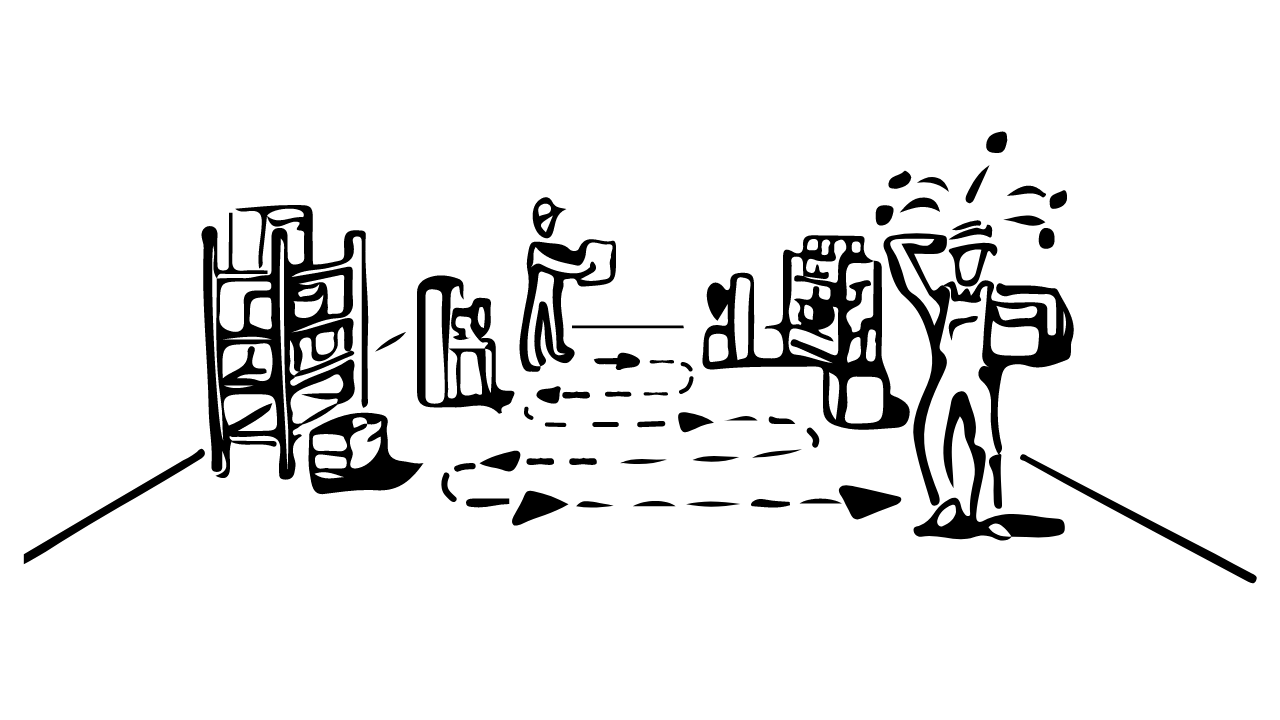
In any system, bottlenecks occur when a resource becomes overwhelmed with demand, leading to slowdowns and disruptions in the flow of work. These bottlenecks can have a significant impact on the overall efficiency of the process, leading to longer lead times, higher costs, and decreased customer satisfaction.
The Solution: Standardized Work
Standardized work is a powerful tool for bottleneck management, as it provides a clear and consistent process for managing resources and ensuring that they are working at maximum capacity. By using standardized work, organizations can identify bottlenecks early and take action to resolve them before they become major disruptions. Standardized work also helps to ensure that all resources are used efficiently, maximizing the overall efficiency of the process.
"The Lean Handbook: A Guide to the Principles and Practices of Lean" by Mark Reich
"The Lean Manager: A Novel of Lean Transformation" by Mark Reich
"The Lean Six Sigma Pocket Toolbook: A Quick Reference Guide to 100 Tools for Improving Quality and Speed" by Michael L. George, John Maxey, David Rowlands, Mark Price
"Implementing Lean Software Development: From Concept to Cash" by Mary Poppendieck, Tom Poppendieck
"The Lean Enterprise: How Corporations Can Innovate Like Startups" by Trevor Owens, Jason Stockman
"Value Stream Mapping: How to Visualize Work and Align Leadership for Organizational Transformation" by Karen Martin, Mike Osterling.
Jeffrey K. Liker is a professor of industrial and operations engineering at the University of Michigan and a well-known author in the field of lean manufacturing and the Toyota Production System.
Toyota Culture:The Heart and Soul of the Toyota Way (co-authored with Michael Hoseus)
The Toyota Way Fieldbook: A Practical Guide for Implementing Toyota's 4Ps (co-authored with David Meier)
Toyota Talent: Developing Your People the Toyota Way (co-authored with David Meier)
Developing Lean Leaders at All Levels:A Practical Guide (co-authored with George Trachilis)
The Toyota Product Development System:Integrating People, Process and Technology (co-authored with James M. Morgan)
The Toyota Way to Continuous Improvement:Linking Strategy and Operational Excellence to Achieve Superior Performance (co-authored with James Franz)
The Toyota Way to Service Excellence: Lean Transformation in Service Organizations (co-authored with Karyn Ross)
The Toyota Way to Lean Leadership:Achieving and Sustaining Excellence through Leadership Development (co-authored with Gary L. Convis)
The Toyota Way to Healthcare Excellence:Increase Efficiency and Improve Quality with Lean (co-authored with James Morgan and Joanne Lynn)
Lean Manufacturing Resources:
Lean Thinking: Banish Waste and Create Wealth in Your Corporation by James P. Womack and Daniel T. Jones
Learning to See: Value Stream Mapping to Create Value and Eliminate MUDA by Mike Rother and John Shook
Lean Six Sigma:Combining Six Sigma Quality with Lean Production Speed by Michael L. George
The Goal: A Process of Ongoing Improvement by Eliyahu M. Goldratt
Gemba Kaizen: A Commonsense Approach to a Continuous Improvement Strategy by Masaaki Imai
Toyota Production System:An Integrated Approach to Just-In-Time by Yasuhiro Monden
Kaizen: The Key to Japan's Competitive Success by Masaaki Imai
The Machine That Changed the World:The Story of Lean Production by James P. Womack, Daniel T. Jones, and Daniel Roos
Lean Enterprise:How High-Performance Organizations Innovate at Scale by Jez Humble, Joanne Molesky, and Barry O'Reilly